


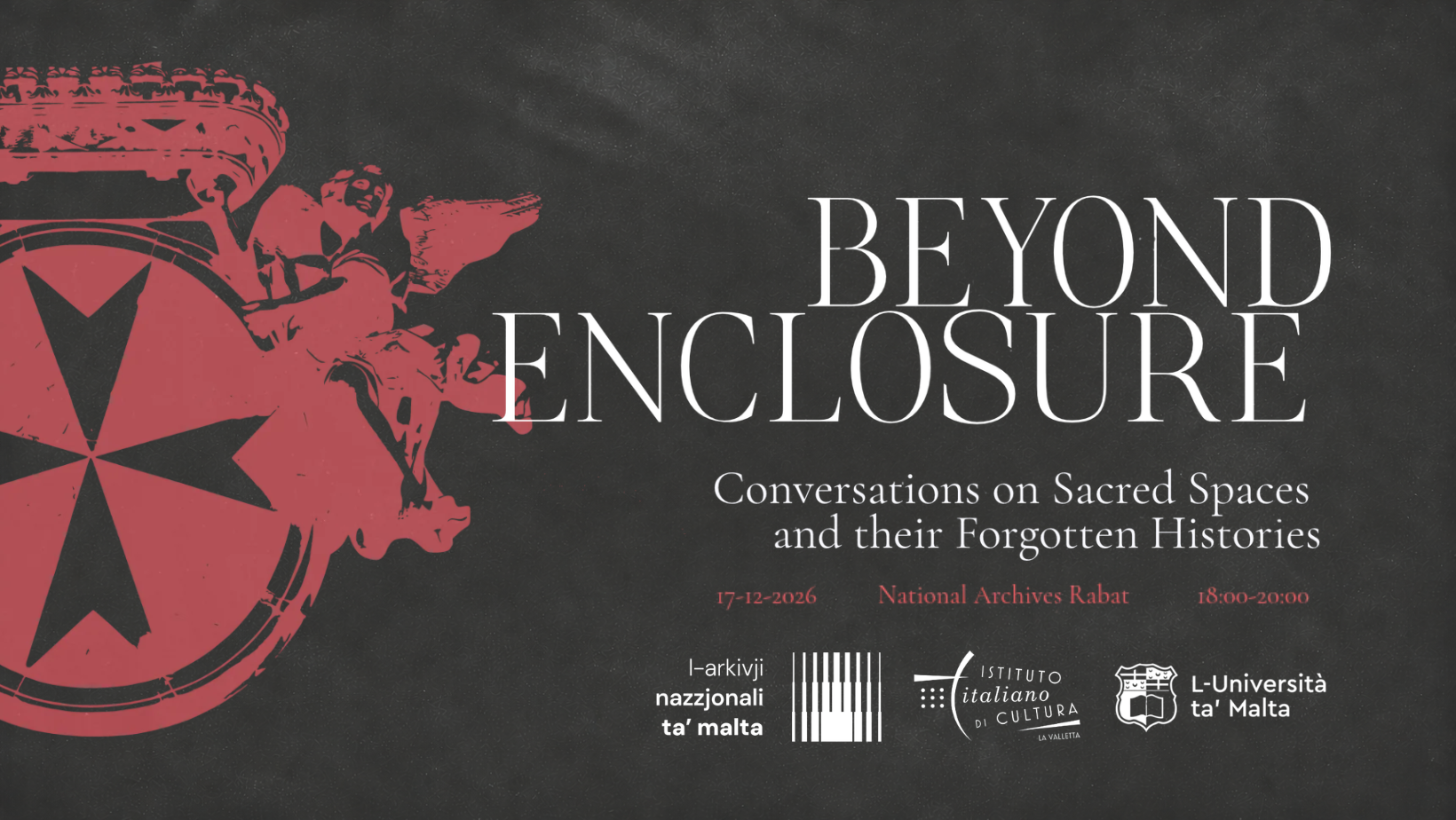
Conversations on Sacred Spaces and their Forgotten Histories
– Free admission: no registration required –
Ecclesiastical heritage lies at a unique intersection of history, faith, community, and spatial functionality. As demographics, socio-political interests, and urban landscapes change, a critical challenge emerges: how can the study, safeguarding, valorisation, and protection of sacred buildings allow past, present, and future to coexist harmoniously within the same space? This event will stimulate a conversation with students and cultural heritage professionals to debate locked, abandoned, reused, or commodified sacred architecture, exploring how these spaces can survive as dynamic civic and cultural landmarks and embrace new meanings and functions in the footsteps of the past, rather than becoming mere pay-to-enter tourist attractions or speculative market assets.
Our guest speaker, Don Elia Carrai, serves as Superintendent for Ecclesiastical Cultural Heritage for the Diocese of Florence, Rector of San Giovannino (formerly the Church and Monastery of the Hospitaller Nuns in Florence), and Professor of Fundamental Theology at the Facoltà Teologica dell’Italia Centrale. Don Elia’s perspective bridges two roles: as a hands-on steward of sacred sites shaping their future and as an academic engaged in theological and historical research. He will share first-hand insights into balancing the practical realities of preservation with reflection on the spiritual and communal significance of ecclesiastical heritage. Drawing on his experience guiding a student community, Don Elia will discuss these challenges through the lenses of stewardship and theological-historical inquiry, offering participants a rare view into the negotiation between lived tradition and contemporary change.
Using the complex history and afterlife of the Hospitaller Monastery of San Giovannino in Florence as a primary case study, the discussion will include brief interventions by Prof Emanuel Buttigieg, Dr Matthias Ebejer, Dr Christian Mifsud, and Dr Valeria Vanesio to show how multidisciplinary dialogue bridging history, material culture, architecture, and archives can breathe new life into historic structures whose histories are otherwise lost. The session explores the transition from a cloistered community to an open church, showing how spaces once tied to historical communities (of which only archives, objects or buildings remain) can become dynamic centres for new living communities without forgetting their past complexities and voices. By reinterpreting these spaces not as dead monuments but as shared spaces, the discussion shows how sites tied to historical communities can become vital spaces of recovered histories, beauty, inclusion, and civic community that counter the homogenization of modern urban spaces.
The venue
Hosting the evening in the former chapel of the once Santo Spirito Hospital, now the seat of the National Archives, is no coincidence. Once sacred ground in a structure that was the oldest surviving hospital on the island, the structure and its chapel serve the equally sacral purpose of conserving the island and people’s memory, which is the best-case scenario marrying historical purpose with contemporary needs.
The local context
Furthermore, this discourse carries immediate urgency for contexts like Malta, where rapid urbanisation, shifting community structures, and the commercial exploitation or abandonment of historic built heritage threaten local identities. By addressing the preservation of historic and cultural heritage, this event highlights how scientific and academic collaborations that transcend personal beliefs or pastoral duties can uncover forgotten stories and recover existing spaces.
Current scholarship argues that historic churches challenge contemporary market logic by offering radical spaces of openness, collective memory, and refuge. Whether preserving local memory or recovering international heritage such as the shared legacy of the Hospitallers, interdisciplinary cooperation remains essential to giving these sacred spaces a meaningful afterlife.
The session will conclude with an open roundtable and Q&A, followed by light refreshments.
Jointly organised by the National Archives of Malta and the University of Malta (DLIAS and History), with the scientific patronage of the Italian Cultural Institute.